How to Spot Fake Turquoise: A Checklist for UK Buyers
A practical checklist for UK buyers to tell natural turquoise from dyed howlite, resin blocks and other imitations before parting with money.
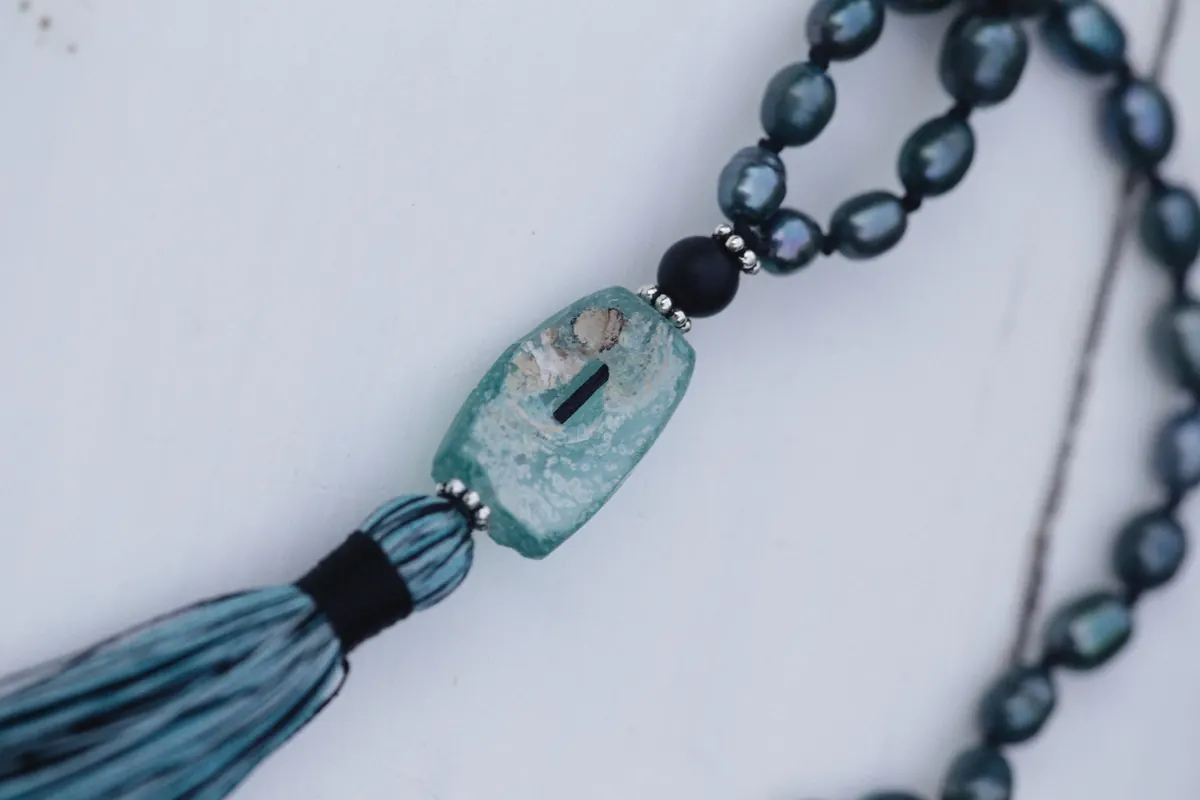
Turquoise has a problem most gemstones would envy: nearly everyone recognises it, and nearly everyone wants a piece. That popularity has made it one of the most imitated stones on the market. A bright blue cabochon in a silver ring can be genuine, stabilised, dyed howlite or a lump of resin — and at arm's length they can all look convincing. The good news is that most fakes give themselves away once you know what to look at. Here is a practical checklist for buying in the UK, whether you are at a weekend fair, in a high street shop or scrolling an online listing at midnight.
Start with what real turquoise actually looks like
Turquoise is a hydrated copper aluminium phosphate, roughly 5 to 6 on the Mohs hardness scale. That means it polishes well but scratches and chips more easily than quartz. It is also porous, which is why it darkens over years of wear and why so much of it is treated before it reaches a display tray.
Three things are worth memorising:
- Colour. Genuine turquoise runs from pale robin's-egg blue through sky blue to a distinctly greenish blue. It usually shifts and varies across a single stone. A flat, uniform, almost fluorescent blue across a large surface is a warning sign, not a bargain.
- Matrix. The brown, black or golden-brown webbing is host rock that formed with the turquoise, so it should look integrated — irregular, sometimes grainy, sometimes fine and web-like. It should not look like a network of cracks filled with dark ink.
- Feel. Real stone is cool to the touch and feels dense for its size. Resin and plastic feel warm and oddly light.
The words that tell you what you are buying
Sellers use a vocabulary that ranges from honest to deliberately foggy. Get to know it.
- Natural turquoise. Untreated, nothing added. Rare and priced accordingly.
- Stabilised turquoise. Genuine turquoise infused with resin under pressure to harden it. Very common, entirely acceptable, and it should be disclosed.
- Dyed or "enhanced" turquoise. Low-grade, pale "chalk" turquoise dyed to a stronger colour. Still stone, but the colour is not its own.
- Reconstituted or block turquoise. Turquoise dust mixed with resin and dye, pressed into blocks and cut like stone. Usually sold cheaply in beads and cabochons.
- Imitation. Howlite, magnesite, dyed jasper, glass or plastic.
Watch for the trade names too. "African turquoise" is a dyed jasper. "White buffalo turquoise" is usually howlite or magnesite. "Vienna turquoise" is glass or resin. None of these are illegal descriptions, but none of them are turquoise.
The usual impostors
Dyed howlite
Howlite is white with grey or black veins, and it drinks dye. The result can look remarkably like turquoise with matrix. Giveaways: the webbing is often too heavy and too regular, the blue sits in the cracks rather than in the stone, and the piece feels light. Check the drilled hole or the back — if there is white showing through, you have your answer.
Dyed magnesite
Magnesite is white and creamy and takes colour very evenly. Many pieces have no matrix at all, or have brown lines painted or heat-treated onto the surface. Uniform colour plus fake matrix is the classic combination.
Resin and plastic
Modern resin can be moulded to look startlingly good, sometimes with metal flecks added for "pyrite". Look for bubbles, a mould seam along the edge, and a surface that seems too perfect. Warmth and lightness settle it.
Checks you can do before you pay
- Use a loupe or your phone's macro lens. At 10x, natural turquoise looks granular. If dye has soaked into fissures, the colour will be darker in the cracks and lighter on the surface. Bubbles or a seam mean resin.
- Turn it over. Look at the back, the edges and inside the drill hole. Dye often stops where the display can't see.
- Wipe with a damp tissue, then try acetone. A cotton bud dipped in nail varnish remover will lift dye from howlite or magnesite in seconds. Ask the seller first, test somewhere hidden, and stop as soon as you have your answer — acetone can also dull a resin finish.
- Weigh it in your hand. Compare two or three pieces of similar size. The genuine stone should feel noticeably cooler and denser.
- Smell it. Rub a dyed bead briskly between your palms. Chemical or solvent smells are a bad sign. Skip the hot-needle test at a stall — it damages the piece and proves very little.
Questions worth asking a seller
"Is this natural, stabilised, dyed or reconstituted?" is the whole conversation in one sentence. A knowledgeable seller answers straight away. Vague answers — "it's genuine turquoise, love" — are not answers.
Mine names are useful colour, not proof. A stone described as Sleeping Beauty, Kingman or Persian may well be what it claims, but the name alone carries no guarantee, and it is easy to repeat. What matters far more is whether the seller will put the description in writing on the receipt or invoice. If it is wrong, that paperwork is what you rely on.
Be wary of listings that use "turquoise-coloured", "turquoise matrix", "genuine imitation" or simply "Chinese turquoise" without further detail. Honest listings say "stabilised" or "dyed howlite" in the first paragraph, not buried in the small print.
Buying online in the UK
Ask for daylight photographs, including the back, and a short video turning the piece in the hand — dye pooling and resin seams show up far better in video than in a retouched still. Read the returns policy before you buy.
UK consumer rules generally give you a short cooling-off period for most online purchases, and your rights if goods are not as described are stronger than many sellers admit. Keep the listing, the screenshots and the receipt, and raise problems quickly in writing. If a dispute turns serious, or if you are spending a significant sum, take proper advice — a report from an independent gemmologist or a lab is money well spent on an expensive piece.
A five-second checklist before you commit
- Colour varies across the stone; no flat electric blue.
- Matrix looks grown-in, not painted or pooled in cracks.
- No white core at the drill hole or on the reverse.
- Cool and dense in the hand; no chemical smell.
- Seller names the treatment plainly and writes it down.
- Price and description match the grade you are being sold.
Nothing beats handling good stones. Spend an afternoon looking at well-documented turquoise in a museum collection or with a jeweller who will talk you through their stock, and your eye will start doing most of the work for you. Until then, ask the blunt question, look at the back, and walk away from anything that dodges either.
Photo: Alexey Demidov / Pexels