Quartz Varieties Compared: Amethyst, Citrine, Rose and Smoky
Amethyst, citrine, rose quartz and smoky quartz share a chemistry but differ in colour, clarity and care. A practical comparison for collectors, jewellers and crystal lovers.
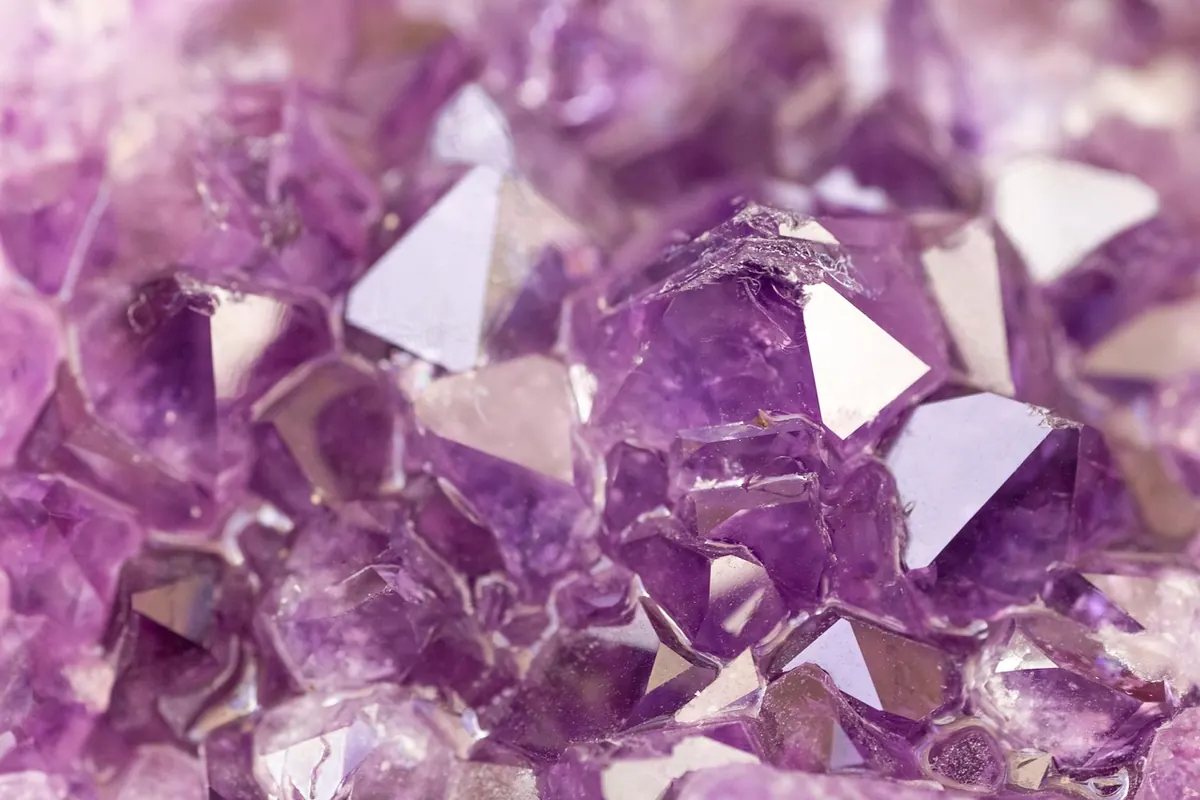
Put an amethyst point beside a polished rose quartz heart and you might assume the two are unrelated. They share the same chemistry — silicon dioxide — and the same Mohs hardness of 7. What separates them is a trace of iron or aluminium, the heat and radiation each crystal met while it grew, and several centuries of trade habit. For anyone buying, setting or collecting quartz, those differences decide whether a stone looks alive in a ring or flat on a tray.
The shared ground
All four are quartz: SiO2, hardness 7, no cleavage, and a glassy lustre that takes a high polish. They fracture rather than split, which makes them reasonably tough in a pendant but prone to small chips along facet edges. Colour comes from impurity-driven colour centres, usually involving iron or aluminium together with natural irradiation, so heat and strong light can change what you see. Quartz is common enough to be taken for granted; it is also the most varied gem material most of us will ever handle.
Amethyst: purple with a memory of heat
Amethyst runs from pale lilac to a deep, almost grape purple. The trade label “Siberian” describes the finest, coolest, most saturated material, whatever its actual origin. Brazilian and Uruguayan geodes supply most of the market, with Zambia and Madagascar producing strong stones too. Look closely and you will often see colour zoning — bands or tips that are darker than the rest, because the colour centres did not form evenly.
Two practical points follow. Prolonged strong sunlight can fade amethyst, so a south-facing windowsill is a poor display spot. Heat turns it yellow, which is why so much citrine exists. Never solder or torch near a set amethyst. The best stones hold a medium tone in daylight and show red flashes under a warm bulb; very dark amethyst often looks black indoors.
Citrine: the sunny one, often with a heated past
Citrine covers lemon, honey and deep gold. The honest news is that most citrine sold today began as amethyst and was heated, frequently from Brazilian or Uruguayan geode material. Natural citrine is paler, usually an even smoky yellow, and far less common. Heated citrine often shows a stronger orange tone with colourless patches near the base of a cut stone.
Its colour is generally stable in daylight, which makes citrine a practical choice for everyday jewellery. Clean, large citrine is readily available, so size alone adds little; cut quality and evenness of colour matter more.
Rose quartz: soft colour, cloudy habit
Rose quartz takes its pink from traces of titanium, iron or manganese, and it almost never forms the crisp crystals that amethyst does. It grows massive — a solid, sugary mass — so most of it becomes cabochons, beads, carvings and spheres. Madagascar, Brazil and South Africa are major sources.
Translucent material is the goal. A faceted rose quartz that looks milky is normal; a clean, deep pink one with good transparency is uncommon and priced accordingly. Star rose quartz, cut to show a six-rayed star, owes its effect to fine rutile needles inside the stone. Colour can fade with long, direct sun exposure, and beaded bracelets fail at the thread long before the beads wear out, so restring before it snaps.
Smoky quartz: grey, brown and quietly sophisticated
Smoky quartz ranges from pale champagne-grey to near-black morion. Its colour comes from aluminium impurities activated by natural radiation, and it often grows alongside amethyst. Scotland’s Cairngorm stones gave the variety one of its oldest trade names, while Brazil, Madagascar and the Alps produce large, well-formed crystals.
Faceted smoky quartz has real depth when the material is transparent; a dark, heavily included stone simply looks like a hole. Rutile needles can create a cat’s-eye effect. Keep it away from hot dashboards and long, direct sunlight, as the colour can fade.
Telling them apart: what to check before you buy
- Citrine or heated amethyst? Natural citrine tends to be pale, smoky yellow with even colour; heated material is often strongly orange with white patches near the base of the cut stone.
- Amethyst colour: view it on white paper in daylight, then under a warm bulb. Good stones keep depth in daylight and flash red under the bulb.
- Rose quartz clarity: some cloudiness is expected. Judge evenness of pink rather than flawless transparency, which is rare.
- Smoky transparency: look through the stone from behind. If no light passes, the cut will not perform.
- Inclusions: rutile needles, tourmaline and chlorite are character, not damage — unless they reach the surface and weaken an edge.
- Treatments: assume citrine is heated unless the seller says otherwise, and ask about coatings, which can wear.
Care that protects colour and polish
- Clean all four with lukewarm water, a drop of mild washing-up liquid and a soft brush; rinse and pat dry.
- Skip ultrasonic and steam cleaners on heavily included stones.
- Store pieces in a soft pouch or lined compartment — quartz scratches quartz.
- Keep amethyst and smoky quartz out of long, direct sunlight and away
Photo: KAVOWO / Pixabay